







April 15, 2026
Group Transportation in Paris: Airport Transfers, City Tours and Corporate Shuttles
Group transportation in Paris: airport transfers, city tours, corporate shuttles, ZFE compliance, and 2026 logistics for tour operators and planners.
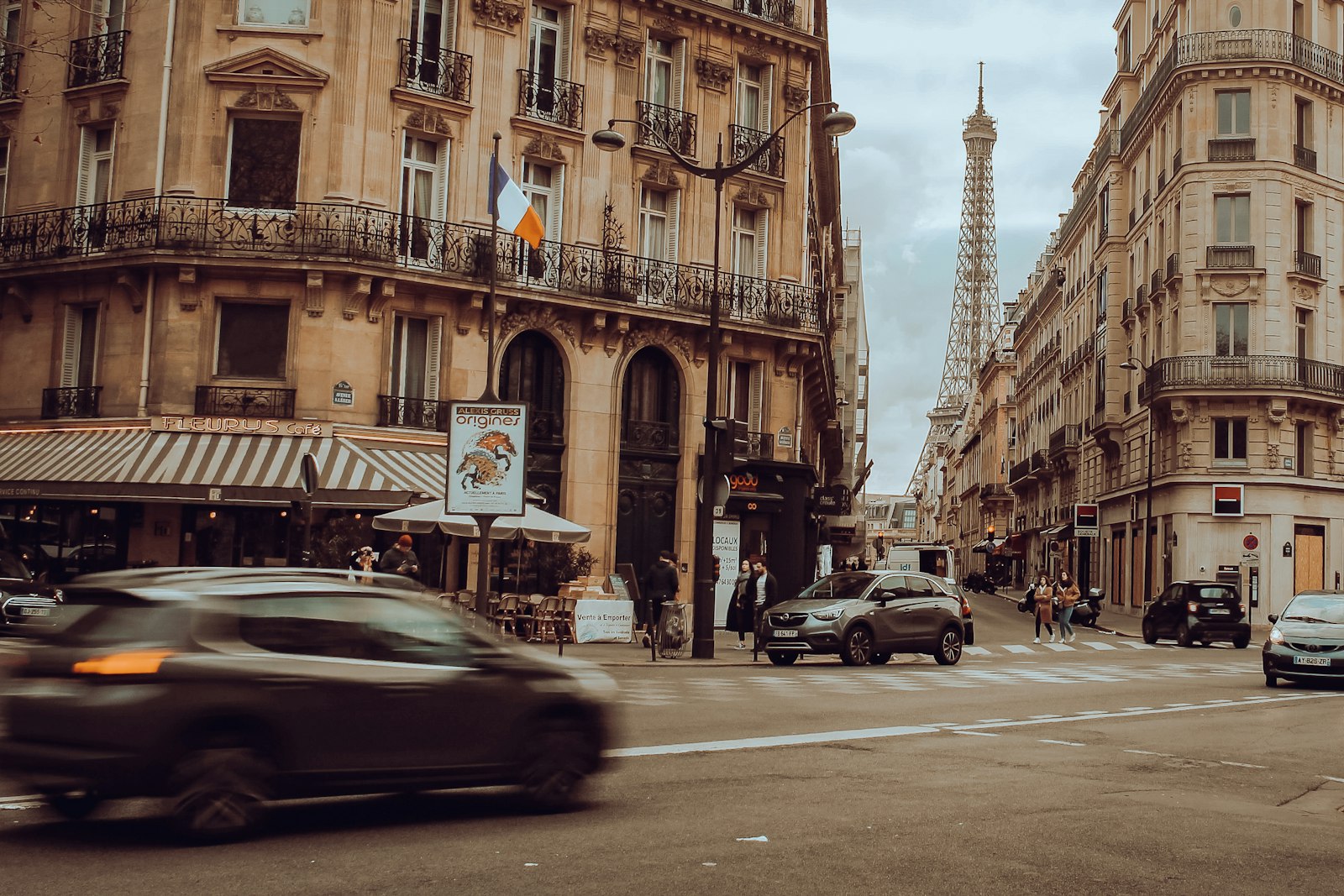
With more than 30 million annual business and leisure visitors, three major airports serving the metropolitan area, and a road network shaped over centuries rather than designed by an engineer, Paris is one of the most operationally complex European cities for group transport. The 2026 rollout of expanded Low Emission Zone restrictions inside the Périphérique adds a fresh compliance layer that catches out providers and planners new to the city every week.
Group transportation in Paris requires local expertise of a kind that is hard to bluff. Knowing that Avenue Foch is one-way northbound only between specific hours, that Place de la Concorde restricts coach access during the early-evening rush, that some 7th arrondissement venues require permits 48 hours in advance, and that ZFE rules now exclude older Crit’Air 4 coaches from parts of the city is the kind of knowledge that comes from operating, not from reading.
This guide is for tour operators, MICE planners, wedding coordinators, and corporate event managers who need to navigate the specifics of Paris-based group transport in 2026: airport transfers across three hubs, city tour logistics, corporate shuttle planning, and ZFE compliance for the coach fleet you choose.
Why Paris group transport requires local expertise in 2026
The Paris market combines three operational frictions that compound on every event. The road network was not built for modern coaches. Many central arrondissements have streets that legally exclude vehicles above certain dimensions or weights. The traffic regime varies by hour, day, and event in the city. And the ZFE Low Emission Zone, expanded most recently in 2025, restricts coach access based on the Crit’Air pollution category.
A provider operating Paris transfers regularly maintains the right fleet mix (Crit’Air 1 or 2 coaches for central access, plus the local permits for restricted zones), staffs drivers who know the access protocol at each major venue, and operates a dispatch system aware of city-specific event days when traffic compounds dramatically (Roland-Garros, Paris Fashion Week, the Foire de Paris). A non-Paris provider entering the city for a single event regularly underestimates these factors and pays for it in delays.
Airport transfers — CDG, Orly, Beauvais
Paris is served by three airports, each with different operational profiles and price points. The right choice for your group depends on flight availability, group size, and arrival flexibility.
Choosing the right airport for your group
Charles de Gaulle (CDG) handles the largest share of international traffic, with three terminals spread across a substantial footprint. Most long-haul and intercontinental flights land here, along with major European routes. Coach pickup is well-organised but requires familiarity with terminal-specific access rules. Allow 45 minutes from gate to pickup point for international arrivals, more during peak hours.
Orly serves a mix of international and domestic traffic, with shorter walking distances and generally faster baggage claim. The drive to central Paris is also shorter than from CDG. For executive groups arriving on European flights, Orly is often the more efficient choice if the schedule allows.
Beauvais sits about 85 kilometres north of Paris and primarily serves low-cost carriers. Transfer time to central Paris runs 75 to 100 minutes by road, and the airport has limited coach pickup infrastructure. Use Beauvais only when the flight schedule forces it; corporate groups generally do better with CDG or Orly.
Transfer times and costs by airport
From CDG to central Paris (1st to 9th arrondissements): typical transfer time 45 to 75 minutes depending on the hour, with peak-hour journeys touching 90 minutes. From Orly to central Paris: 30 to 50 minutes typically. From Beauvais: 75 to 100 minutes, longer in heavy traffic.
For a 50-seat coach transfer in 2026, expect base prices around €280 to €450 from CDG to central Paris, €230 to €380 from Orly, and €450 to €650 from Beauvais (the longer distance and tolls drive the price up). Add €40 to €100 for parking permits, €30 to €80 for meet-and-greet service, and night surcharges if applicable.
City tours and sightseeing
Paris is one of the highest-volume group sightseeing markets in Europe. Operating tours here requires coordination with the city’s specific coach access rules, parking availability at major attractions, and the seasonal traffic pattern that shifts every quarter.
Coach-friendly routes and stops
The classic Paris coach tour route covers the Trocadéro for Eiffel Tower views, Arc de Triomphe, Champs-Élysées, Place de la Concorde, Louvre, Notre-Dame, and the Latin Quarter, with optional extensions to Montmartre. Each stop has its own coach drop-off and parking arrangement. Some, like Trocadéro and the Louvre’s Quai François Mitterrand stop, work cleanly. Others, like Notre-Dame and Montmartre, have access constraints that require alternative drop-off points and short walks.
A 4-hour coach tour of central Paris in 2026 typically costs €380 to €650 with driver for a 50-seat vehicle, depending on the season, the day, and inclusions. Half-day tours running 6 hours are €550 to €900, full-day tours running 8 to 10 hours run €750 to €1,400.
Popular day-trip destinations (Versailles, Giverny, Reims)
Versailles is the most popular Paris day trip, sitting 25 kilometres south-west of the city centre. Coach access to the palace is well-organised, with dedicated parking and a 5-minute walk to the entrance. Allow 45 minutes each way in traffic, more during peak season.
Giverny (Monet’s garden) is 85 kilometres north-west of Paris, a 90-minute drive. The site is small and coach parking is limited; pre-booking through the operator is recommended. Reims (champagne region) is 145 kilometres north-east, a 2-hour drive, and works well for full-day champagne tasting tours. Other popular options include Fontainebleau, the Loire Valley châteaux (a long day, usually overnight), and Mont Saint-Michel (overnight required from Paris).
Corporate transfers and shuttles
Paris hosts more corporate events than any other European city in many years, with venues spread across the central arrondissements, La Défense business district, and the suburban exhibition centres. Each location has different transport implications.
La Défense and business district logistics
La Défense, the main business district, sits to the west of central Paris. Coach access to most of the office tower complexes is via the Boulevard Circulaire ring road, with limited drop-off points near the major venues. The Palais des Congrès de la Défense (CNIT) has a dedicated coach access protocol that the major Paris operators handle routinely but that catches out occasional providers.
For executive transfers between Paris hotels and La Défense, a chauffeured vehicle is often faster than a coach due to the access restrictions and the typical group size. Plan for 35 to 55 minutes from a central Paris hotel to La Défense, longer during peak commuting hours.
Conference venues and on-site shuttle planning
Major Paris conference venues each have specific access protocols. Paris Expo Porte de Versailles, the largest venue, has organised coach access but heavy traffic on event days. Palais des Congrès at Porte Maillot has limited coach drop-off windows that require pre-booking. The Carrousel du Louvre and Pavillon Cambon are central but coach-restricted, requiring drop-off at nearby points with a short walk.
For multi-day conferences with rolling hotel-to-venue shuttles, the right pattern is usually a 30-minute shuttle wave running between a hotel cluster and the venue, with timing aligned to session start. A provider operating Paris regularly anticipates the rush-hour traffic compression and adjusts the shuttle schedule accordingly. When you’re planning conference shuttles in Paris, BusCom’s local operations team builds the shuttle schedule against the specific venue and traffic profile — reach us at contact@buscom.info.
The Paris Low Emission Zone (ZFE) — what coaches need to comply
The ZFE (Zone à Faibles Émissions) restricts vehicle access to central Paris based on the Crit’Air pollution category. As of 2026, coaches in the Crit’Air 4 and 5 categories are excluded from the area inside the Périphérique during weekday daytime hours. The Crit’Air 3 category is restricted from some inner-city zones. Crit’Air 1 (electric, plug-in hybrid) and Crit’Air 2 (Euro 6) coaches retain full access.
For group transport in 2026, this means confirming that every coach assigned to your Paris event carries the Crit’Air 1 or 2 sticker visibly on the windscreen. Providers with modern fleets (under 6 years old, Euro 6 diesel or hybrid) typically comply by default. Older fleets may require substitution for a Paris event, and inexperienced providers occasionally arrive with non-compliant vehicles that face entry fines or refused access at the Périphérique.
The ZFE rules are scheduled to tighten further during 2026 and 2027, with the Crit’Air 3 category likely facing wider restrictions. Confirm with your provider that their Paris-active fleet is forward-compatible with announced rule changes for the dates of your event.
How BusCom operates in Paris
BusCom operates from a Paris base with a local fleet matched to the city’s specific requirements: Crit’Air 1 and 2 vehicles compliant with the current and announced ZFE rules, local drivers fluent in French and English (with additional languages on request), familiarity with every major Paris venue’s access protocol, and a dispatch operation aware of the city’s event calendar and traffic patterns.
With 20,000+ customers served across Europe, a 4.6 out of 5 Trustpilot rating, same-day quotes, GDPR-compliant data handling, multilingual support, and active operations across France, Germany, the Netherlands, Belgium, Sweden, Norway, and the wider EU, BusCom handles Paris transfers, city tours, corporate shuttles, and multi-day group programs against the operational realities of the 2026 city.
Group transportation in Paris is one of the highest-leverage logistics decisions on any event the city hosts. The right local operator removes friction from airport arrivals, city tours, corporate shuttles, and ZFE compliance, while a non-Paris provider often discovers the city’s specifics in the moments they cost the event most. The €280 starting point for a CDG to central Paris coach transfer is the base; what determines whether the day runs cleanly is which provider drives it and how prepared they are for the city.
Send your Paris group transport brief to contact@buscom.info or call +33 1 84 80 99 65 to plan airport transfers, city tours, or multi-day corporate shuttles with a provider that operates Paris every day.