







May 13, 2026
How to Vet a Group Transport Provider in Europe: 8 Non-Negotiable Criteria
How to choose a group transport provider in Europe: 8 procurement-grade criteria covering licensing, insurance, fleet, SLAs, and pricing.
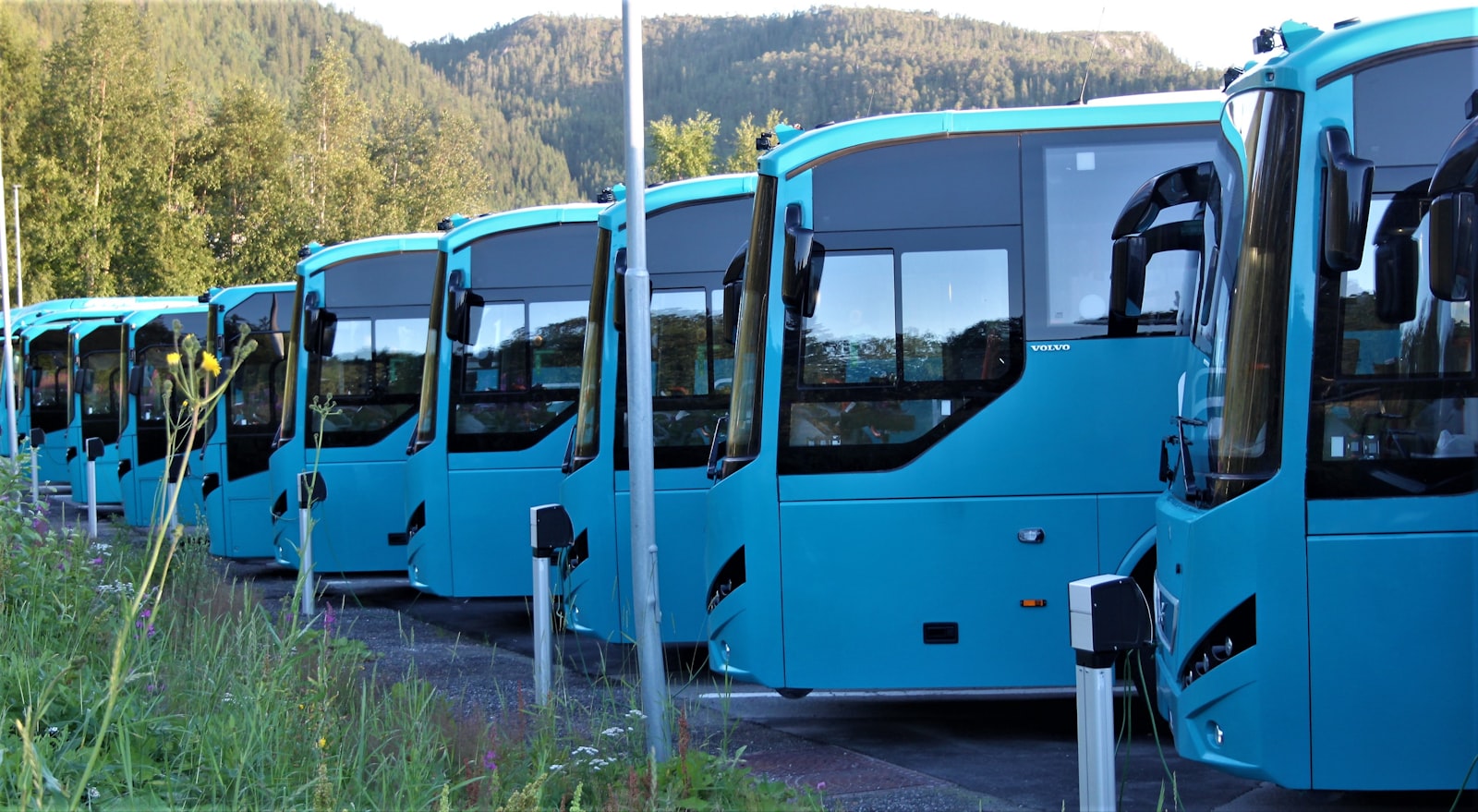
In a 2024 European procurement survey, roughly 38% of corporate travel buyers reported at least one major transport incident with an external provider in the past 24 months. The recurring theme: incomplete vendor vetting. Late arrivals, vehicles that did not match the brief, drivers without proper language skills, insurance gaps surfaced only after an incident, and billing disputes were the most common complaints.
The frustrating part is that almost all of these incidents would have been prevented by 30 minutes of structured due diligence at the RFP stage. Knowing how to choose a group transport provider in Europe is less about luck and more about running every shortlisted candidate through the same eight criteria.
This guide is the procurement-grade checklist most planners never receive. Apply it to your next RFP, score each provider on the same scale, and your shortlist conversation becomes a 20-minute scoring exercise rather than a gut-feel debate.
Why vendor vetting matters more than ever in 2026
Three forces have pushed the bar higher this year. Corporate procurement teams are tightening third-party risk frameworks in response to wider supply-chain compliance pressure. EU regulations on driver hours, emissions, and data handling have hardened, and providers who cut corners are visible faster. And insurance carriers have raised the cost of underwriting transport incidents, which means the contractual line items now matter more than ever.
The result is a market with a wider quality gap. The top providers have professionalised, while a tail of operators continues to under-invest in compliance and operations. The eight criteria below help you tell them apart cleanly, regardless of how polished the sales pitch sounds.
Criterion 1 — Licensing and regulatory compliance
Every European country has its own transport operator licensing regime. In France, providers must hold a Licence de Transport de Personnes issued by DREAL. In Germany, the equivalent is the Personenbeförderungsschein. In the UK, an operator must hold a PSV Operator’s Licence from the Traffic Commissioner.
Ask each provider to share their licensing documents for every country where they will operate during your event. Genuine providers send them within an hour. Operators who delay, partially redact, or invoke confidentiality reasons are often the ones with gaps. Cross-border events make this criterion non-negotiable: a French licence does not authorise commercial passenger transport in Belgium for the same operator without the right additional permits.
Criterion 2 — Insurance and liability coverage
Standard EU coach insurance covers third-party liability and passenger injury, but the stated limits vary wildly between providers. Some carry minimum statutory coverage. Others carry €10 million or more in extended commercial liability for corporate events. The difference matters when something goes wrong.
Request a certificate of insurance specifying coverage limits, named beneficiaries, and territorial scope. For events involving senior executives, journalists, or attendees whose injury or absence carries reputational or financial weight for your organisation, push the provider to demonstrate coverage well above the legal minimum. The €200 the provider invests annually in extended liability is the cheapest insurance policy your event will ever buy.
Criterion 3 — Fleet age, condition and accessibility
Ask for the average fleet age and the maintenance regime. Reputable European operators run fleets averaging under five years old, with documented maintenance every 25,000 to 40,000 kilometres. The vehicle category and seat count promised on the quote should match what arrives on event day, not a similar substitute.
Accessibility matters for any group event in 2026. Confirm wheelchair access if any attendee requires it, and confirm Crit’Air, Euro 6, and Low Emission Zone compliance for events in cities like Paris, Berlin, Milan, or London where older coaches face access restrictions. A provider who hesitates on these specifics is signalling a fleet that may not fully meet your brief.
Criterion 4 — Driver qualification and language skills
In Europe, professional coach and bus drivers must hold a Driver CPC (Certificate of Professional Competence) refreshed every five years, plus the country-specific commercial driving permit and a clean criminal record check. Ask the provider to confirm that every driver assigned to your event holds current certifications.
Language is the criterion most planners underestimate. For a multi-country roadshow or an international corporate event, drivers who speak English to a working professional level (B2 minimum) are not a luxury. They are operational continuity. A driver who cannot communicate clearly with the planner, the attendees, or the local authorities is a single point of failure. Insist on language confirmation in the RFP response, not in a casual reassurance.
Criterion 5 — SLAs and contingency plans
An SLA without contingency planning is a polished document with no operational value. Ask for the provider’s written response to four specific scenarios: a vehicle breakdown during your event, a driver who falls ill on the morning of departure, a flight delay of more than two hours, and a route closure due to incident or weather.
Strong providers answer each scenario with a concrete protocol: backup vehicle dispatched within X minutes, on-call replacement driver pool, real-time flight monitoring with automatic schedule adjustment, alternative routing pre-mapped for major European cities. Operators who answer in generalities (“we handle it case by case”) are telling you they have no system. When you’re evaluating providers for a high-stakes event, BusCom’s planners walk through each of these scenarios in writing before the contract — reach us at contact@buscom.info to see the format.
Criterion 6 — GDPR and data handling
To deliver corporate transport, providers handle personal data: attendee names, flight numbers, hotel assignments, mobile contacts, occasionally health or accessibility needs. Every shortlisted provider must demonstrate GDPR compliance, including a documented data processing agreement (DPA), a clear data retention policy, and a notification process for breaches.
Ask three direct questions. Where is attendee data stored? How long is it retained after the event closes? Who has access internally and externally? Providers with mature compliance answer these questions in writing within a business day. Those who improvise verbally are often running unsecured shared drives, which becomes your problem when an attendee asks where their data went.
Criterion 7 — Reference customers and case studies
Ask for three references from comparable corporate events in the past 12 months. Same group size order of magnitude, same complexity (single-city or multi-city), same fleet category. Vague reference lists (“we have worked with major brands across Europe”) are a yellow flag. Specific, recent, comparable references are the gold standard.
Call at least one reference. A 10-minute call with a previous client surfaces more useful information about a provider than 10 pages of marketing material. Ask three questions: was the delivery what they expected, what went wrong and how was it resolved, and would they rebook. The answers tell you almost everything you need to know about how to choose a group transport provider in Europe with confidence.
Criterion 8 — Pricing transparency and quotation clarity
A reputable provider quotes in itemised format covering vehicle category, hours of service, distance, driver inclusion, fuel policy, insurance coverage, anticipated surcharges (night, weekend, cross-border, parking, tolls), and the cancellation and amendment policy. Vague quotes with a single headline figure and a “details on request” are the source of most billing disputes.
Push back on any quote that does not itemise these elements. A provider who refuses to itemise is either hiding margin or has not internally costed the brief accurately. Both outcomes hurt you. The 30 minutes you spend forcing transparency at the RFP stage saves hours of dispute resolution after the event.
How BusCom meets these criteria
BusCom operates against this framework as the standard for corporate clients across Europe. Every quote we issue is itemised line by line. Every driver assigned to a corporate event holds current Driver CPC certification and language skills confirmed in writing. Our insurance coverage extends well above the statutory minimum across our active markets in France, Germany, the Netherlands, Belgium, Sweden, Norway, and the wider EU.
With 20,000+ customers served, a 4.6 out of 5 Trustpilot rating, same-day quotes, GDPR-compliant data handling, SSL-secured booking, multilingual support, and operating bases in Paris, Munich, Amsterdam, and Stockholm, BusCom is structured to pass the eight-criteria scoring exercise without requiring repeated follow-up requests.
Knowing how to choose a group transport provider in Europe stops being a guessing game once you commit to running every candidate through the same eight criteria. Licensing, insurance, fleet, drivers, SLAs, GDPR, references, and pricing transparency cover the structural risk surface of any group transport engagement. A provider who scores well on all eight is rarely the cheapest on the headline quote, and almost always the cheapest on the total cost of the event, once incident risk and operational overhead are priced in.
Send your RFP or group brief to contact@buscom.info or call +33 1 84 80 99 65 to receive a structured response against each of the eight criteria for your next corporate event.